
petroleum minister has announced that fuel prices would not be hiked and talks with allies on the issue were on.
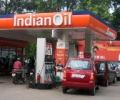
State-owned Indian Oil Corp wants diesel prices to be freed from government control before its twin follow-on public offersto raise maximum funds, company Chairman B M Bansal said on Monday.

Aviation Turbine Fuel (ATF) prices have more than doubled to a record high, impacting airlines and consumers, while commercial LPG rates also see a significant increase.
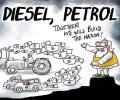
Petrol and diesel prices are unlikely to be increased despite firming raw material costs because of upcoming general elections next year, Moody's Investors Service said. Three state-owned fuel retailers -- Indian Oil Corporation (IOC), Bharat Petroleum Corporation Ltd (BPCL) and Hindustan Petroleum Corporation Ltd (HPCL) -- which control roughly 90 per cent of the market, have kept petrol and diesel prices on freeze for a record 18 months in a row. This is despite the raw material (crude oil) cost surging last year, leading to heavy losses in first half of 2022-23 fiscal year before easing oil prices propelled them to profitability.
The Indian National Lok Dal (INLD) held protests across Haryana against the fuel price hike, stating that inflation has severely impacted the common man. Protests were led by various INLD leaders across the state, with demonstrations including symbolic acts and confrontations with local authorities.
For the first time in the history of India, state-run oil firms on Saturday passed on the benefit of appreciating rupee value to consumers by way of a 10 paise per litre cut in petrol and diesel prices.
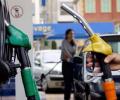
Petrol and diesel prices on Sunday were hiked for the fourth straight day by 35 paise per litre each, pushing pump rates to new record high across the country with states with high incidence of local taxes such as Madhya Pradesh having the costliest fuel. The price of petrol in Delhi rose to its highest-ever level of Rs 109.34 a litre and Rs 115.15 per litre in Mumbai, according to a price notification of state-owned fuel retailers. Diesel now costs Rs 98.07 a litre in Delhi and Rs 106.23 in Mumbai.

With global crude oil prices climbing to their highest level in two-and-a-half years, Oil Minister S Jaipal Reddy on Friday said a ministerial panel will take a call on raising petrol and diesel prices.

The hikes, effective from midnight tonight, are excluding state sales tax or VAT and actual increase will be higher and will vary from city to city

Diesel price on Monday was hiked by 25 paise per litre -- the third increase since last week -- and more rate hikes for both diesel and petrol are in the offing in the coming days as international oil prices have soared to a three-year high. The price of diesel was hiked to Rs 89.32 per litre in Delhi and to Rs 96.94 in Mumbai, according to a price notification of state-owned fuel retailers. This is the second straight day of increase in diesel prices and the third since September 24 when the state-owned oil firms ended a three-week hiatus in rates.
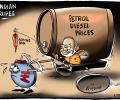
In five hikes, petrol price has gone up by Rs 2.74 per litre and diesel by Rs 2.83.
According to Oil Ministry sources, price hike of diesel is being considered as the government scrambles to find ways to meet an unprecedented Rs 160,000 crore (Rs 1,600 billion) deficit expected this fiscal on selling diesel, cooking gas and kerosene below their production cost.

Petrol and diesel prices on Wednesday were hiked by 80 paise a litre each for the second day in a row since the ending of an over four-and-half month hiatus in rate revision. Petrol in Delhi will now cost Rs 97.01 per litre as against Rs 96.21 previously while diesel rate has gone up from Rs 87.47 per litre to Rs 88.27, according to a price notification of state fuel retailers.

Amid a spate of government proposals at its door, the Election Commission has asked all Union government departments to route their proposals through the Cabinet Secretariat.

India's wholesale price inflation surged to 8.30 per cent in April, up from 3.88 per cent in March, primarily driven by a significant increase in the prices of fuel, power, and crude petroleum, according to data from the commerce and industry ministry.

India is significantly expanding its crude oil sourcing to Latin America, with Venezuela emerging as a major supplier, as geopolitical disruptions in the Middle East and the Strait of Hormuz compel the world's third-largest oil consumer to diversify its energy supplies.
The Indian government has approved the introduction of one billion polymer banknotes in Rs 10 and Rs 20 denominations for field trials, aiming to enhance durability. This move comes as the Finance Minister also addressed Parliament on declining retail inflation, GST reforms, and other fiscal measures taken to support the economy and household consumption.
Raise diesel prices or else face a situation similar to the recent grid failure which led to complete blackout across 20 states for hours, Planning Commission Deputy Chairman Montek Singh Ahluwalia said on Friday.
Rising crude oil prices have become a headache for the government, as they put pressure on inflation and fiscal deficit.
Senior Trinamool Congress leader Abhishek Banerjee has accused the BJP-led central government of planning to increase fuel prices after the West Bengal assembly elections. He challenged the BJP to promise no price hikes for LPG, petrol, and diesel over the next five years.

Petrol and diesel prices are likely to be cut by close to Re 1 per litre this weekend on sliding global oil rates.
State-owned oil companies may raise petrol prices by Rs 1.50-Rs 2 per litre early next week, while a Rs 2 a litre hike in diesel rates is under the government consideration, a senior official said.
Last year, the country produced about 77.52 million tonnes of fruits, 149.6 million tonnes of vegetables, 104.32 million tonnes of rice and 93.90 million tonnes of wheat.
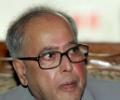
A meeting of a ministerial panel headed by Finance Minister Pranab Mukherjee, to consider raising diesel price by at least Rs 2 a litre, was deferred twice last month and no new date has been notified yet.
The petroleum ministry has proposed a Rs 3.25 per litre hike in petrol and about Rs 4 per litre increase in diesel prices in line with the spurt in global crude oil prices that have touched $66 a barrel.

Elevated global crude oil and natural gas prices, driven by geopolitical developments in West Asia, could significantly influence the Government of India's fiscal position for 2026-27, according to a report by ratings agency Icra.

While the starting price is the same as the Duster at Rs 10.4 lakh, the top-end is slightly cheaper at Rs 18.5 lakh for the 1.3l automatic.

The expert group was tasked to suggest a methodology for pricing of diesel and cooking fuel.
Left parties on Monday opposed any increase in petrol and diesel prices in step with the hike in global oil prices and higher taxes, and asked the government to restructure duties to protect the consumers.

The Indian government has increased the export duty, or windfall tax, on diesel to Rs 55.5 per litre and on aviation fuel (ATF) to Rs 42 a litre, effective immediately, to boost domestic availability and prevent exporters from exploiting global price differences.
"We had announced last year that the decision would be taken at an appropriate time to deregulate diesel, the government hasn't changed their decision... We have to see how the inflationary pressures go and take a decision," Revenue Secretary Sunil Mitra told reporters on the sidelines of an Assocham function.

If the conflict continues for a prolonged period, State-run oil companies may have to review retail fuel prices accordingly.
The government on Thursday decided not to increase petrol and diesel prices, and issue oil bonds worth Rs 23,457 crore (Rs 234.57 billion) to partly compensate public sector oil companies for the losses incurred on fuel sales."We have kept our promise of not raising prices of sensitive petroleum products," Petroleum Minister Murli Deora told PTI after a meeting of the Cabinet.
Petrol and diesel prices were on Thursday hiked by 80 paise a litre each, taking the total increase in rates in the last 10 days to Rs 6.40 per litre. Petrol in Delhi will now cost Rs 101.81 per litre as against Rs 101.01 previously while diesel rates have gone up from Rs 92.27 per litre to Rs 93.07, according to a price notification of state fuel retailers.
Petrol, diesel prices hiked by Re 1/ litre
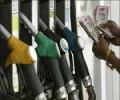
In one of the steepest increases since daily price revision was started, petrol price on Thursday was hiked by 25 paise per litre and diesel by 30 paise as oil companies raised rates for the third straight day to pass on to consumers the increase in international oil prices.
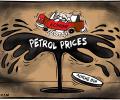
Petrol and diesel prices were raised for the second day in a row on Wednesday as state-owned fuel retailers resumed daily rate revision after a more than two-week long hiatus during assembly elections in states like West Bengal. Petrol price was increase ford by 19 paise per litre and diesel by 21 paise a litre, according to a price notification of state-owned fuel retailers. Petrol in the national capital now costs Rs 90.74 a litre and diesel comes for Rs 81.12 per litre.
With food inflation ruling at uncomfortable level, Petroleum Minister S Jaipal Reddy on Thursday ruled out freeing of diesel prices from government control, saying the move was not politically and practically feasible.
'I have no problems with the finance ministry or with state governments treating petrol pump prices as the last resort for meeting their ambitious spending targets with very limited revenue resources.' 'But let's do away with this smokescreen of free pricing of petrol and diesel and go back to administered pricing regime,' says Dr Sudhir Bisht.

Since end-May there has been volatility in the foreign exchange market.
